GmsToCups.com

Tips · Guides · Conversions

Cooking and Measurement Guides

Helpful guides on converting grams to cups, reading recipe measurements and measuring ingredients the right way, so your baking turns out the same every time.

Featured guide

Dry vs Liquid Measuring Cups: What Is the Difference?

The difference in dry vs liquid measuring cups is how you fill them: a dry cup is filled to the rim and leveled flat, while a liquid cup has lines below the rim so you can pour and read it at eye level. Both hold the same amount, since a 1 cup measure of either kind equals 16 tablespoons. Using the wrong one still causes errors, because each cup is built for one kind of ingredient. This guide shows how to tell them apart, which cup fits each ingredient and how to use each one.

10 min read
  • Kitchen Tips

    High Altitude Baking: How to Adjust Any Recipe

    High altitude baking works when you make a few small changes to a sea level recipe: raise the oven 15 to 25°F, use less baking powder and sugar, and add a little more liquid and flour. These changes start to matter at about 3,000 feet above sea level. Thin air makes batter rise too fast, dry out sooner and sink in the middle. This guide shows each change by elevation, with grams, so you can fix cakes, cookies and bread at home.

    11 min read

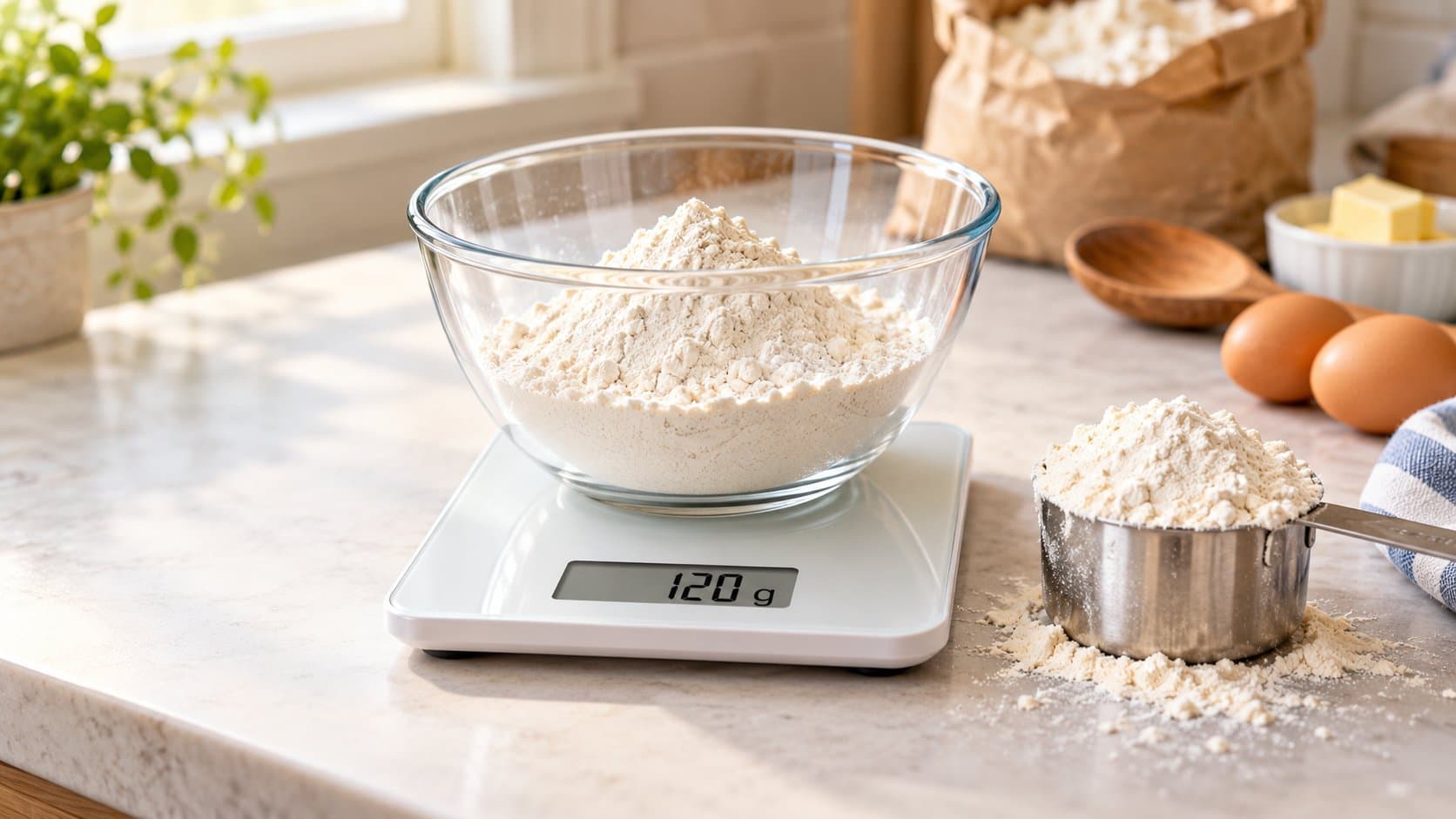
  • Flour in a glass bowl on a digital kitchen scale reading 120 g, next to a measuring cup of flour

    Baking Basics

    Why Baking by Weight Is Better Than Using Cups

    Baking by weight is better because a scale measures the same amount every time, while a cup can hold very different amounts of the same ingredient. A cup of all-purpose flour can weigh about 120 grams or as much as 160 grams, based only on how you fill it. This guide explains why weighing gives more reliable cakes, cookies and bread. You will also see when cups still work and how to start with a simple kitchen scale.

    8 min read