Why Baking by Weight Is Better Than Using Cups
Baking by weight is better because a scale measures the same amount every time, while a cup can hold very different amounts of the same ingredient. A cup of all-purpose flour can weigh about 120 grams or as much as 160 grams, based only on how you fill it. This guide explains why weighing gives more reliable cakes, cookies and bread. You will also see when cups still work and how to start with a simple kitchen scale.
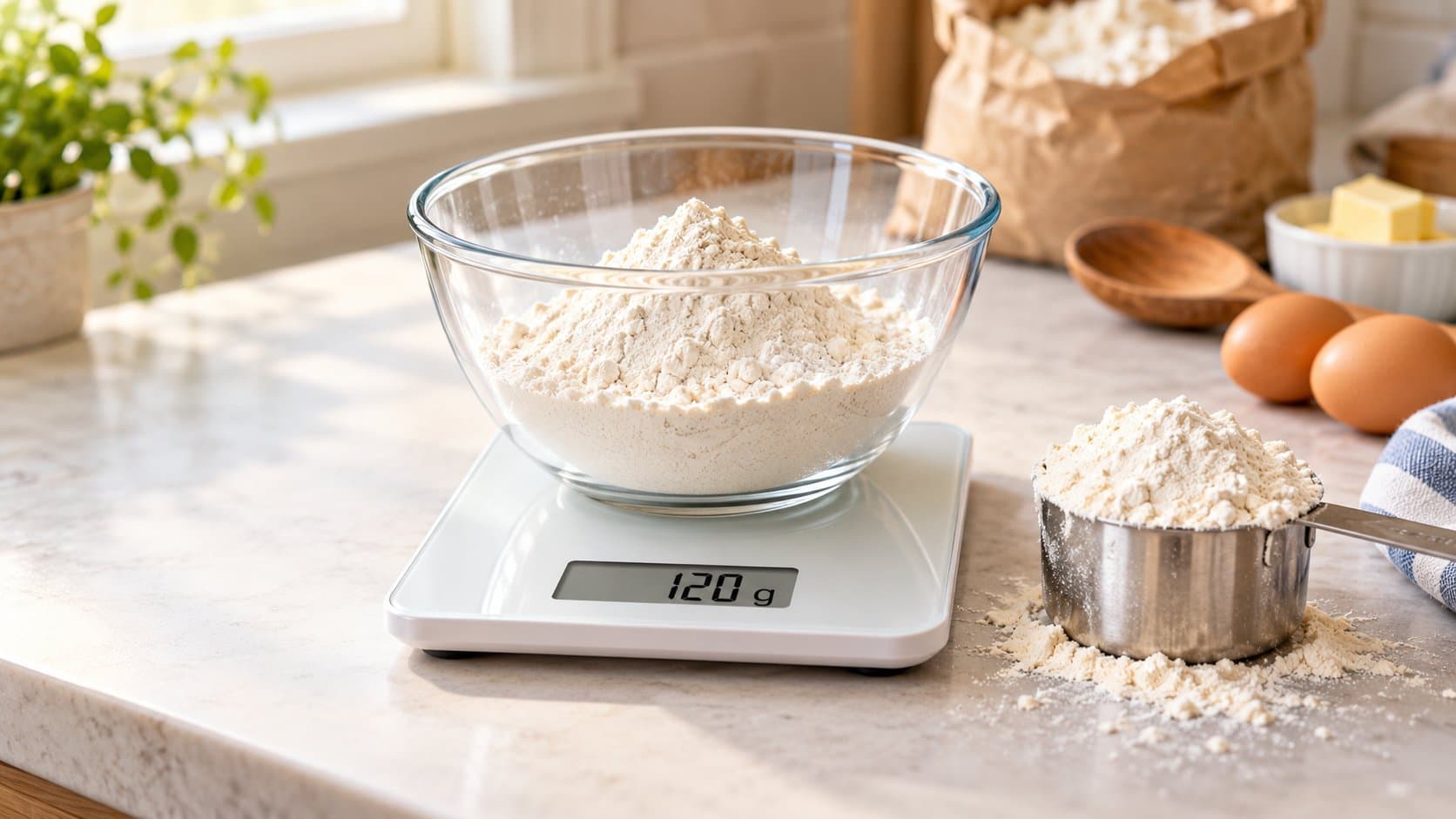
Table of contents
Quick answer
- A measuring cup measures space, not amount. Flour can sit loose or packed, so the weight inside the cup changes.
- King Arthur Baking says a cup of all-purpose flour holds about 120 g when fluffed and leveled, and up to 160 g when packed.
- America's Test Kitchen says the flour in a 1 cup measure can vary by as much as 20 percent from one baker to the next.
- NIST calls weighing ingredients with a kitchen scale a best practice for recipe accuracy.
- A scale gives the same grams every time, so your results repeat.
What Weighing Ingredients Means
Weighing ingredients means you set your bowl on a digital scale and add each ingredient until the screen shows the grams the recipe asks for. Measuring by volume means you fill cups and spoons instead. Many recipes from outside the United States list grams, and US sources such as King Arthur Baking list both cups and grams. A gram is a unit of mass, so 100 grams of flour is the same amount of flour in any kitchen.
Why a Cup of Flour Never Weighs the Same
A measuring cup holds a fixed space, but flour is full of air. When flour settles in the bag, it packs down, and a scoop pulls up more of it. When you stir it loose and fill the cup lightly, the cup holds less. The same cup can give you very different amounts of flour for the same recipe.
| Source | How the cup is filled | Weight of 1 cup all-purpose flour |
|---|---|---|
| King Arthur Baking | Fluffed, filled lightly, leveled | About 120 g |
| King Arthur Baking | Packed or settled flour | Up to 160 g |
| America's Test Kitchen | Average of dozens of volunteers | 5 oz (about 142 g) |
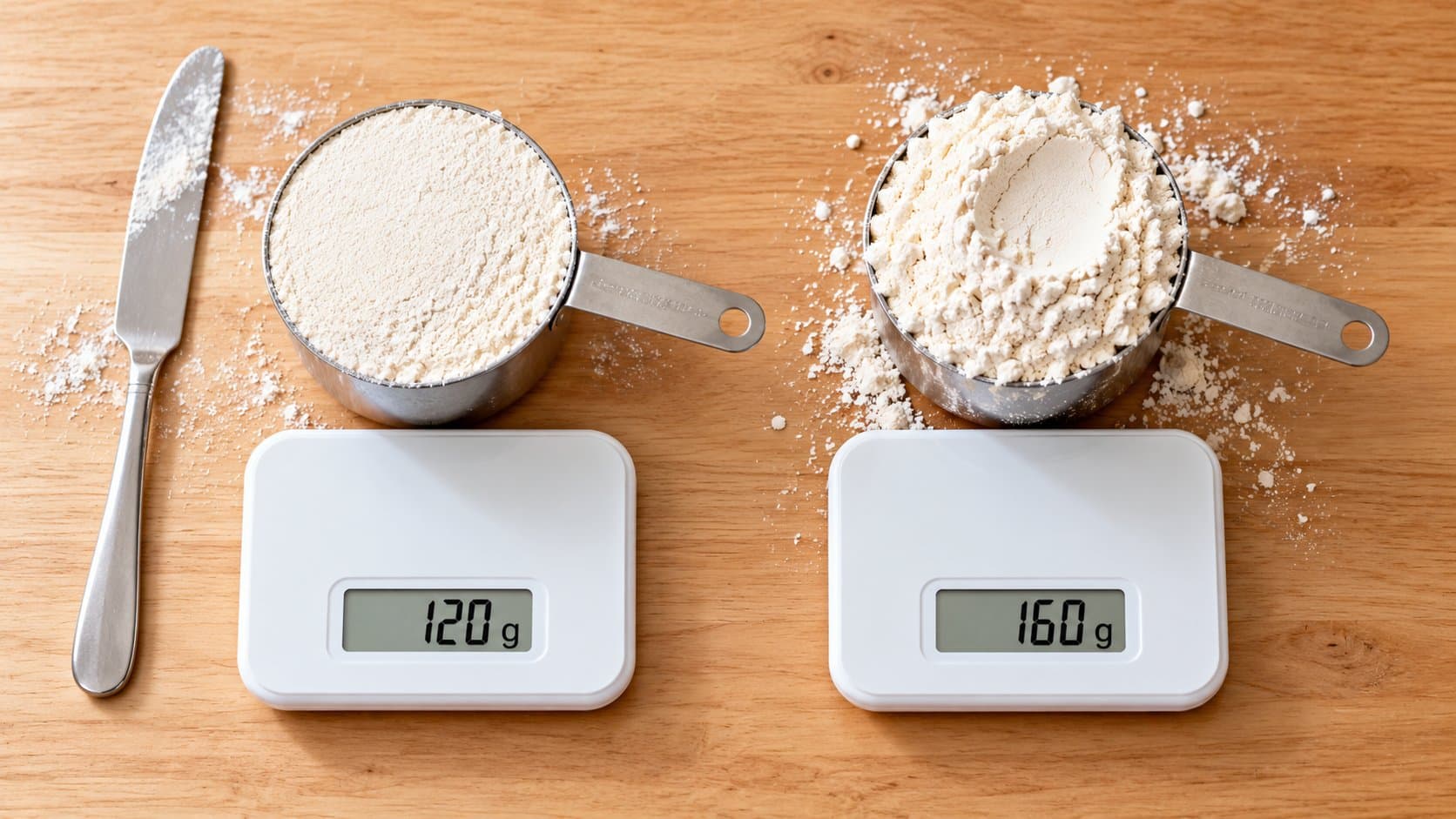
The gap between 120 and 160 grams is 40 grams, which is one third more flour. In a recipe with 3 cups of flour, that adds up to 120 extra grams, about one more cup by King Arthur's standard. Too much flour can make cakes dry and cookies thick and dense. Our all-purpose flour grams to cups converter uses 120 grams per cup, the value on the King Arthur chart.
Different Ingredients Have Different Cup Weights
Even when you measure with care, a cup of flour does not weigh the same as a cup of sugar or butter, because each ingredient packs into the cup in its own way. That means no single number turns every cup into grams. Our grams to cups converter by ingredient explains why and does the math for each one. When a recipe gives butter in sticks or tablespoons, the butter grams to cups chart shows each size in grams.
5 Reasons to Weigh Instead of Using Cups
1. Your Results Repeat
A scale shows the same 120 grams of flour today and next month. Cups depend on your hand, the bag and how settled the flour is. When the amounts stay the same, your cake bakes the same way each time. If something goes wrong, you know the measuring was not the cause.
2. You Wash Fewer Dishes
With a scale, you can add flour, sugar and cocoa to one bowl. Press the tare or zero button after each one, and the screen goes back to 0. You skip the stack of cups and spoons that need washing. Sticky foods like honey and peanut butter also go straight into the bowl, so there is no cup to scrape.
3. Scaling a Recipe Is Simple Math
Halving 3/4 cup is awkward, since half of it is 3/8 cup. Halving 90 grams of flour is just 45 grams. Grams also make it easy to double or triple a batch without fractions. For recipes that still use cups, our half of a measurement chart shows the spoon math.
4. You Can Bake Recipes From Other Countries
Many recipes from the UK, Europe and Australia list ingredients in grams. A metric cup is 250 mL, while a US cup is about 236.6 mL, so cup recipes from different countries do not match. Grams are the same everywhere. A scale lets you follow these recipes exactly as written.
5. Small Errors Stay Small
King Arthur Baking notes that you can generally stay within 5 grams over or under the written amount of flour. That is a tiny gap next to the 40 gram swing between a light cup and a packed cup. Bread bakers also use grams to work out hydration, which is the ratio of water to flour. Those ratios only work when both numbers are weights.
Weight vs Volume at a Glance
| Factor | Weighing in grams | Measuring cups |
|---|---|---|
| Accuracy | Same amount every time | Changes with how you fill the cup |
| Flour per cup | Not needed, you weigh grams | About 120 g to 160 g |
| Scaling a recipe | Simple division or multiplication | Awkward fractions |
| Cleanup | One bowl | Many cups and spoons |
| Recipes from abroad | Follow as written | Cup sizes differ by country |
| Tiny amounts like 1/4 tsp | Hard to read on most home scales | Spoons work well |
When Measuring Cups and Spoons Still Work
Cups are not always a problem. Water and milk pour level and do not pack, so a liquid measuring cup is close enough for most recipes. NIST does warn that using a dry measuring cup for liquids is a common way to add errors. Very small amounts are another case where spoons win. A 1/4 teaspoon of table salt weighs only about 1.5 grams, and many home scales show whole grams, so a measuring spoon is easier to trust.
How to Start Weighing Your Ingredients
- Get a digital kitchen scale that shows grams and has a tare button.
- Set the scale to grams, since a gram is a smaller unit than an ounce and gives finer control.
- Place your empty bowl on the scale and press tare so the screen reads 0.
- Add the first ingredient slowly until you reach the amount in the recipe.
- Press tare again and add the next ingredient to the same bowl.
- For cup recipes, convert each ingredient to grams first, then write the grams on your recipe card.
If a recipe lists ounces, our grams to ounces converter switches them to grams. One ounce equals 28.35 grams, so an 8 oz block of cream cheese is about 227 grams. Once your favorite recipes are in grams, you never need to convert them again.
Summary
- A cup of all-purpose flour can weigh 120 g or up to 160 g, based on how you fill it.
- A scale gives the same amount every time, so your bakes come out the same.
- Weighing means fewer dishes, simple scaling and easy use of metric recipes.
- Use spoons for tiny amounts and a liquid measuring cup for water and milk.
- Start with a digital scale set to grams and use the tare button.
Sources
Common questions
Is weighing really more accurate than using cups?
Yes. America's Test Kitchen says the flour in a 1 cup measure can vary by as much as 20 percent, based on how light or heavy handed the baker is. A scale removes that variation because it measures the amount, not the space.
How many grams is 1 cup of all-purpose flour?
King Arthur Baking lists 1 cup of all-purpose flour as 120 grams when the flour is fluffed and leveled. Packed flour can reach 160 grams per cup. Some publishers use other standards, such as 5 ounces (about 142 grams) at America's Test Kitchen, so check which one the recipe author uses.
Do I need an expensive scale?
No. A basic digital scale that reads in grams and has a tare button covers most home baking. Check that it can hold the weight of your biggest bowl plus the ingredients.
Should I weigh liquids too?
You can, and many metric recipes list liquids in grams. For water, 1 mL weighs about 1 gram, so 1 US cup of water is about 237 grams. Milk is a bit heavier at about 244 grams per cup.
Why do my cookies come out different each time?
Uneven flour is a common cause. If one batch gets a packed cup and the next gets a light cup, the dough changes. Weighing the flour removes this problem, so you can look at other causes like oven temperature or butter softness.
Can I convert my old cup recipes to grams?
Yes. Convert each ingredient with its own cup weight, since flour, sugar and butter all weigh different amounts per cup. Write the grams on your recipe so the next batch is ready to weigh.